Lamp Inspection in Bottled Water Production: Real Value, Limits, and Operational Reality
Lamp Inspection in Bottled Water Production: Real Value, Limits, and Operational Reality
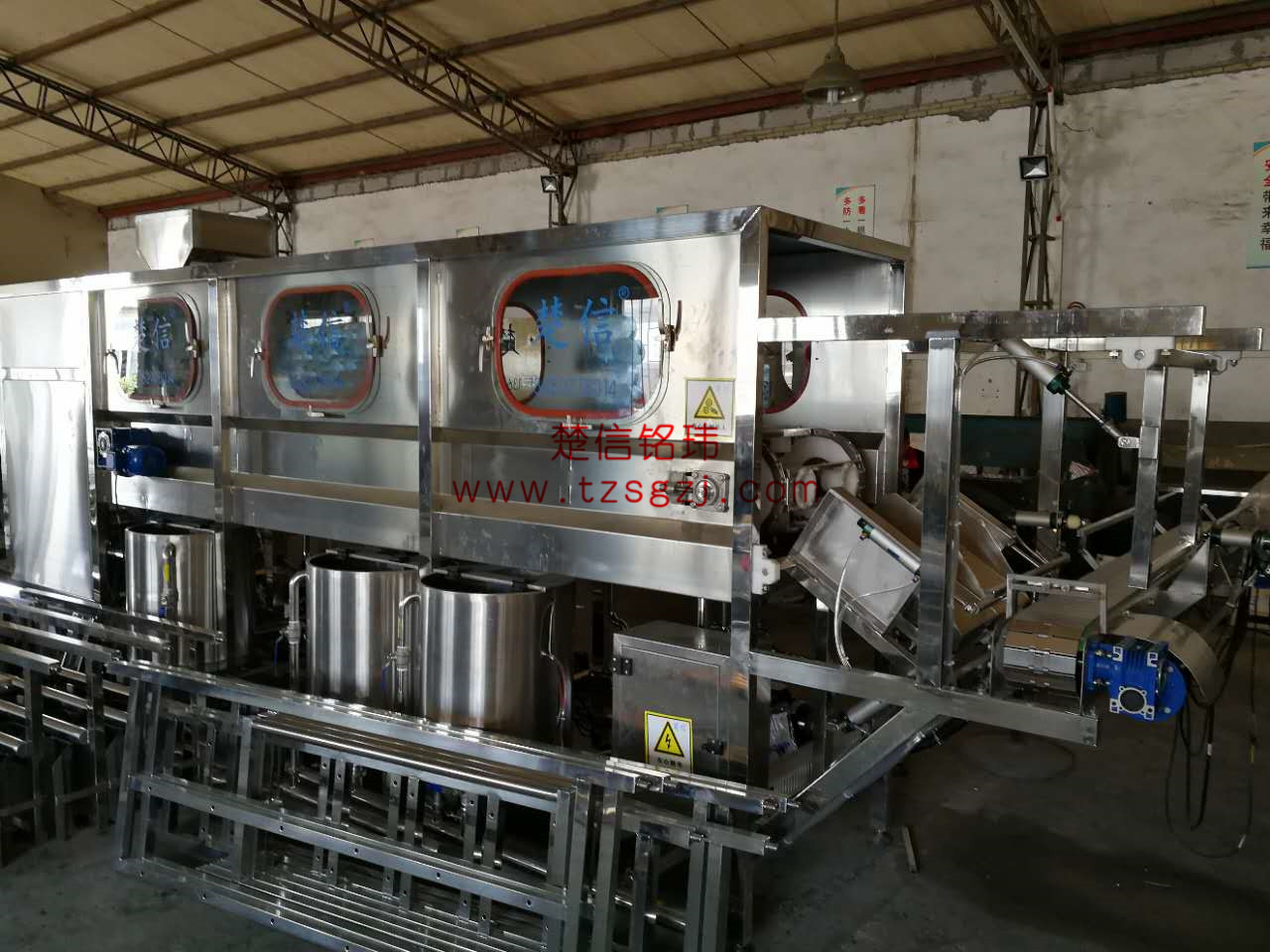
For operators managing daily production of bottled water, particularly those running fully automated filling lines like the Chu Xin Mingwei disinfection and filling line for jugs, lamp inspection is often viewed as the final gatekeeper of product safety. However, treating it as a magic bullet can lead to operational blind spots.
This article cuts through the myths. We analyze the actual value of lamp inspection in your daily operations, define its hard limitations based on current technology and facility standards, and provide actionable steps for integrating it effectively with your water treatment and air purification systems.
The Core Function: What Lamp Inspection Actually Detects
In the context of a standard bottled water filling line (compatible with 18.9L PC jugs and other non-standard sizes), lamp inspection serves a specific physical purpose: visual defect detection.
When a jug passes under high-intensity lighting, the system identifies:
- Foreign particles: Dust, hair, or debris visible on the inner wall or bottom of the container.
- Residual water marks: Incomplete drying after the rinsing stage.
- Physical damage: Cracks, scratches, or deformation that compromises structural integrity.
- Contamination from the environment: Particles introduced during the transfer from the washing station to the filling nozzle.
Fact Check: According to Chuxin Mingwei's specifications, their integrated filling lines are designed to handle capacities ranging from 500 to 5,000 jugs per day. The lamp inspection unit is a critical component of this flow, ensuring that only visually clean containers proceed to the filling stage.
Myth vs. Fact: The Operational Boundaries
Operators often assume that passing a lamp inspection guarantees microbiological safety or perfect purity. This is a dangerous misconception.
Myth 1: "If it passes the light, it's sterile."
Reality: Lamp inspection is purely optical. It cannot detect:
- Microbial load: Bacteria, viruses, or spores invisible to the naked eye or standard lighting.
- Chemical residues: Trace amounts of cleaning agents or dissolved minerals left behind if the water source or pre-treatment was compromised.
- Internal biofilm: Contamination growing inside the jug walls that hasn't yet detached into visible particles.
Operational Implication: You must rely on your water treatment process (e.g., reverse osmosis, ultrafiltration) and air purification systems (ISO Class 8 compliance) to ensure sterility. The lamp inspection only catches what is physically present on the surface at that moment.
Myth 2: "One machine solves all contamination risks."
Reality: The effectiveness of lamp inspection is heavily dependent on the surrounding environment. If the filling zone is not maintained at ISO Class 8 cleanliness (or higher), airborne particles will constantly settle on the jugs, overwhelming the inspection system.
Chuxin Mingwei’s integrated air purification systems are specifically engineered to support this. They provide the necessary airflow and filtration to maintain the cleanroom environment required for the lamp inspection to be effective. Without this environmental control, the lamp inspection becomes a reactive measure rather than a preventive one.
Implementation: Integrating Inspection into Daily Operations
To maximize the value of lamp inspection without over-relying on it, operators should follow these structured steps:
1. Define the Detection Criteria
Do not set the sensitivity too high (causing false rejections of acceptable products) or too low (missing defects).
- Standard: For 18.9L jugs, focus on particles larger than 0.5mm and any visible residue.
- Action: Train operators to distinguish between "acceptable dust" (which might be removed by the rinse) and "critical defects" (cracks, large debris).
2. Correlate with Upstream Processes
If you see a spike in rejected jugs during lamp inspection, do not just adjust the light. Investigate upstream:
- Washing Efficiency: Is the external washing of empty jugs sufficient? (Check the disinfection and filling line's external wash module).
- Water Quality: Is the rinse water free of particulates?
- Air Quality: Are there sudden spikes in airborne dust in the filling room? (Verify air purification system
- performance).
3. Monitor Capacity and Throughput
The inspection speed must match your line's capacity. Chuxin Mingwei’s lines operate at speeds up to 1,800 bottles/hour (for source water lines) or 5,000 jugs/day (for general filling). Ensure the inspection unit's processing speed aligns with your peak production times to avoid bottlenecks.
When Lamp Inspection Fails: Risk Scenarios
Even with perfect equipment, certain scenarios render lamp inspection ineffective:
- Transparent Contaminants: Some chemical residues or clear liquids may not reflect light differently enough to trigger an alarm.
- Deep Internal Contamination: If a jug has a crack deep within the wall structure, light may pass through without revealing the flaw until the jug is filled and pressurized.
- Environmental Failure: A breach in the ISO Class 8
- cleanroom barrier (e.g., open doors, poor sealing) introduces more contaminants than the inspection unit can filter out.
Strategic Recommendation for Operators
For producers of drinking water, food & beverage companies, and industrial water users, the lamp inspection is a vital component of quality assurance, but never the sole defense.
Key Decision Factors:
- System Integration: Choose a filling line where the lamp inspection is seamlessly integrated with the washing and filling modules (like Chuxin Mingwei's modular design) to minimize exposure time.
- Environmental Control: Invest in a robust air purification system that maintains ISO Class 8 standards continuously.
- Process Validation: Regularly validate your water treatment and washing cycles. If the upstream processes are stable, the lamp inspection rate will remain low and manageable.
Conclusion
Lamp inspection provides undeniable value in removing visible defects and protecting brand reputation. However, its limitations regarding microbial safety and invisible contaminants mean it must be part of a holistic quality strategy. By combining it with rigorous water treatment, strict cleanroom management, and automated filling lines designed for stability, operators can achieve true operational excellence.
Don't let the lamp inspection be your only hope. Build a system where it works as intended: the final visual check in a chain of verified controls.
Next Steps
Ready to optimize your production line with a system that balances automation, hygiene, and efficiency?
Contact Huizhou Chuxin Mingwei Industrial Co., Ltd. today to discuss your specific water source characteristics, target capacity, and packaging requirements. Our engineers can help you design a customized solution that includes the right air purification systems, water treatment units, and automated filling lines tailored to your facility.
Contact Us for a Free Consultation
Key Points Summary
- Visual Only: Lamp inspection detects physical defects (particles, cracks, residue) but cannot verify sterility or chemical purity.
- Environment Dependent: Effectiveness relies heavily on maintaining ISO Class 8
- cleanroom conditions via proper air purification.
- Capacity Match: Inspection speed must align with line throughput (e.g., 500–5,000 jugs/day for standard lines).
- Holistic Approach: Must be paired with robust water treatment
- and washing processes to prevent recurring defects.
- Integration: Modern lines like Chuxin Mingwei's integrate inspection directly into the workflow to minimize exposure.
SEO Metadata
seo_title: Lamp Inspection in Bottled Water Production: Real Value, Limits, and Operational Reality | Chuxin Mingwei
seo_description: Understand the real value and limitations of lamp inspection in bottled water production. Learn how Chuxin Mingwei integrates visual defect detection with ISO 8 air purification and automated filling lines for optimal quality control.
seo_keywords: équipement d'emballage pour bidons d'eau, équipements de traitement de l'eau, ligne de remplissage pour bidons d'eau, fabricant d'équipements de traite, Machine entièrement automatique, contrôle qualité eau en bidons, système de purification de l'air ISO 8